
Peoria Residents Directory Search
The Peoria residents directory pulls from several local and state sources to help you find people and public records. Peoria sits along the Illinois River in central Illinois with a population around 113,150. Searching for residents in Peoria means checking city clerk files, county land records, and court case data. You can start a search online or visit offices in person. The Peoria City Clerk and Peoria County offices hold most of the records that make up the local residents directory. State databases from Illinois also cover Peoria and fill in gaps that local files may not have.
Peoria Quick Facts
Peoria City Clerk Records
The Peoria City Clerk is one of the first places to check when building a residents directory search in Peoria. The clerk office sits on the 4th floor of City Hall in downtown Peoria. Hours run Monday through Friday, 8am to 5pm. The City Clerk keeps a range of public files that tie back to Peoria residents. These include business licenses, city ordinances, meeting minutes, and other local records that can help confirm where someone lives or works in the city.
City clerk records are public in Illinois. The state's Freedom of Information Act, found under 5 ILCS 140, gives anyone the right to ask for government records. You can submit a FOIA request to the Peoria City Clerk for specific documents. The clerk must respond within five business days. There is no fee for the first 50 pages of black and white copies in most cases. After that, charges may apply. This law is a key part of how the Peoria residents directory stays open to the public.
The Peoria City Clerk portal shows information on current city council proceedings, public notices, and official city records. You can browse the site from home and get a sense of what files are on hand before you make the trip downtown. For anything not posted online, a written FOIA request is the way to go.
Note: The City Clerk does not hold court records or vital records like birth and death files.
Peoria County Land and Property Records
Land records are a strong tool in a Peoria residents directory search. They show who owns property, when they bought it, and the address tied to the deed. The Peoria County Land Records office handles all deed recordings and property filings for the county. You can call them at 309-672-6090 for questions about a specific parcel or recording. Peoria County land records go back decades, which makes them useful for tracing long-term residents as well as recent buyers.
Property deeds, mortgage documents, liens, and plat maps all fall under this office. When someone buys or sells a home in Peoria, the deed gets recorded at the county level. That recording creates a public record anyone can look up. This data feeds directly into the Peoria residents directory because it links a real name to a real address. Tax records from the Peoria County Treasurer also show ownership details and can confirm current residency.
The Peoria City Clerk office provides a good starting point for local records. Here is a look at the clerk portal, which lists city services and public documents available to Peoria residents.

You can visit the Peoria County land records office in person during normal business hours. Staff there can help you run a search by name or by parcel number. For simple lookups, a phone call to 309-672-6090 often gets you what you need without a visit. Peoria County does offer some online access to land records through its website, though the depth of what you can pull up online varies by document type.
Peoria Court Records Search
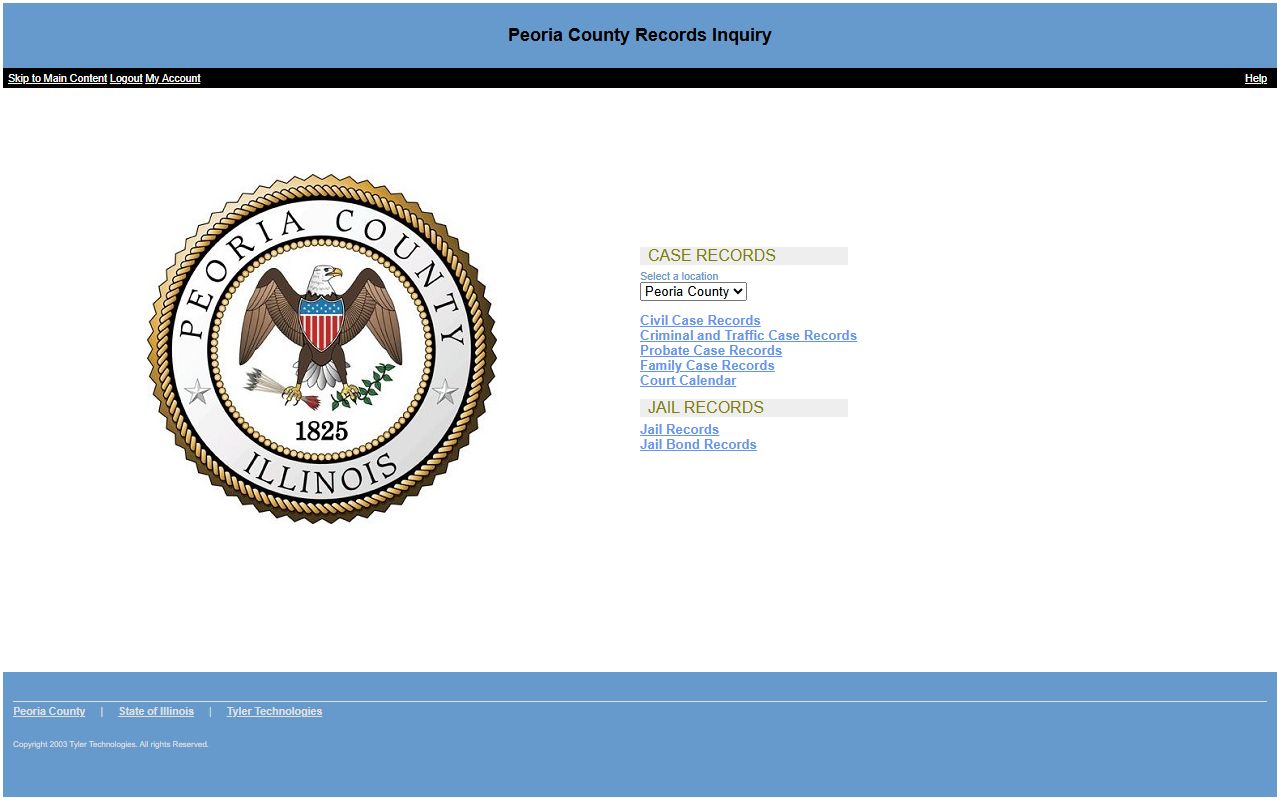
Court records make up a big part of the Peoria residents directory. Civil cases, family law filings, and other court actions all create public records tied to named individuals. The Peoria County Court Records Portal lets you search case data online. This Tyler Technologies system covers the 10th Judicial Circuit and includes cases filed in Peoria County. You can search by party name, case number, or date range. The results show case type, filing date, and the parties involved.
The portal is free to search. You do not need an account to look up basic case info. Case details like the docket, hearing dates, and judgment entries show up once you click into a case. This makes it a fast way to check if a Peoria resident has any court filings on record. The data includes both active cases and closed ones, so you get a wide view of court activity in Peoria.
The Peoria County court portal runs on the Tyler Technologies platform. Below is a view of the search interface where you can look up residents by name across all case types filed in Peoria County.
For records that do not appear online, you can visit the Peoria County Circuit Clerk at the courthouse. The clerk staff can pull case files and make copies for you. Certified copies cost more than plain ones. Bring a valid ID when you visit. The Illinois Courts website also has statewide court information and links to each circuit, including the 10th Circuit that covers Peoria.
Note: Some sealed or expunged records will not show in the public portal even if the person lives in Peoria.
Illinois State Records for Peoria Residents
State-level databases add depth to a Peoria residents directory search. Illinois runs several systems that cover all counties, and Peoria residents show up in these just like anyone else in the state. The Illinois Department of Public Health keeps vital records including birth, death, marriage, and divorce files. These are useful when you need to verify identity or family connections for someone in Peoria.
Vital records from the state go back many years. Birth records are restricted for 75 years in Illinois, meaning only the person named, their parents, or a legal rep can get a copy of recent ones. Death records become public after 20 years. Marriage and divorce records have their own rules. You can order copies from IDPH by mail or through their online portal. The fees run about $15 for a first copy and $2 for each extra. These state records often fill in blanks that local Peoria files do not cover.
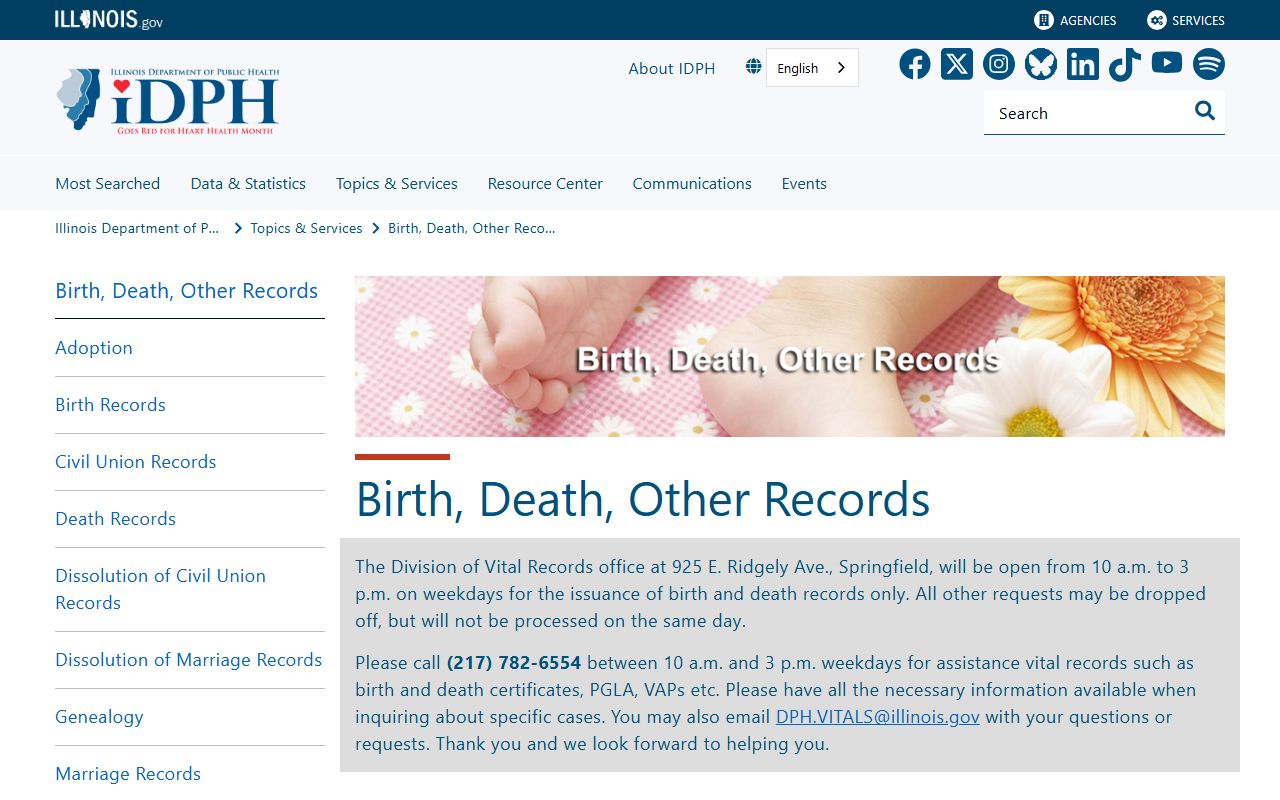
The Illinois Department of Public Health manages vital records at the state level. Their portal covers birth, death, marriage, and divorce records that complement the Peoria residents directory with statewide data.
The Illinois State Police also run public databases that tie into a residents directory search. The sex offender registry, for instance, is searchable by address or name. The Illinois Department of Corrections has an inmate search tool. Neither of these is specific to Peoria, but they cover Peoria residents along with the rest of the state. These tools are free to use and require no account to access.
How to Search the Peoria Residents Directory
There are a few ways to search the Peoria residents directory depending on what you need. Online searches are the fastest option. The Peoria County court portal and the county land records site both let you search from home. State databases from Illinois add another layer. If you need more detail or certified copies, an in-person visit to the right office in Peoria will get you there.
For an online search, start with the court records portal since it covers a wide range of case types. Enter the person's name and see what comes up. Land records are next if you want to check property ownership. The Peoria City Clerk site can help with local business filings and public notices. Each source gives you a different angle on the same person, and using all of them together builds a fuller picture.
In-person searches work best when you need documents that are not online. The Peoria County Courthouse and City Hall are both in the downtown area, which makes it easy to hit both in one trip. Bring a valid photo ID and know what you are looking for before you go. Staff at each office can guide you once you are there, but having a name and approximate date range speeds things up a lot.
Here is what you will typically need for a Peoria residents directory search:
- Full name of the person you are looking for
- Approximate date range or year for the records
- Case number if you already have one from a prior search
- Property address for land record lookups in Peoria
Fees vary by office and record type. Court record searches online are free. Getting certified copies costs more. Land record copies have their own fee schedule at the county level. The City Clerk follows FOIA rules for copy charges. Most searches in the Peoria residents directory start free and only cost money when you need official copies.
Peoria Records and Illinois Law
Illinois law shapes what you can and cannot find in the Peoria residents directory. The Freedom of Information Act under 5 ILCS 140 is the backbone of public records access in the state. It applies to every government body in Peoria, from the city clerk to the county offices. Under this law, public records must be made available to anyone who asks. There are exceptions for things like personal medical files and certain law enforcement records, but the default is open access.
Court records in Peoria follow rules set by the Illinois Supreme Court. Most case filings are public unless a judge seals them. Family law cases involving minors often have parts that are restricted. Criminal cases are generally open. The 10th Judicial Circuit, which serves Peoria County, follows these statewide rules for what goes in the public record and what stays out.
Vital records have separate rules under the Illinois Vital Records Act. Birth certificates are confidential for 75 years. Death records are restricted for 20 years. Marriage and divorce records have different timelines. The IDPH enforces these rules statewide, and they apply equally to Peoria residents. When you search the residents directory using vital records, these restrictions set the boundaries of what you can get.
Nearby Cities Residents Directory
Peoria is in central Illinois, and several other cities with their own residents directory pages are within driving distance. If the person you are looking for has ties to nearby areas, searching those directories can turn up records that do not appear in Peoria files. People move between these cities often, and records follow the location where they were filed, not the person.
Springfield is the state capital and sits about 70 miles south of Peoria. As the seat of state government, Springfield holds many statewide records in addition to its own local files. Bloomington is roughly 65 miles east of Peoria in McLean County. It shares the 11th Judicial Circuit, and its court records cover a different set of filings. Champaign is farther east, about 90 miles from Peoria, in Champaign County. All three cities have their own residents directory pages with local office details and search tools.
Checking these nearby cities can help when a Peoria search comes up short. Court cases, property transfers, and vital records all get filed in the county where the event happened. Someone who lived in Peoria but bought land in Bloomington would have a deed on file in McLean County, not Peoria County. Searching across multiple cities gives you a more complete residents directory view for anyone with ties to central Illinois.
Peoria County Records
Peoria is the county seat of Peoria County. All county-level records for Peoria residents are filed and stored at county offices downtown. The county handles land records, court filings, tax records, and other public documents that feed into the residents directory. Peoria County serves the city of Peoria along with smaller towns and rural areas across the county. For land record questions, call the Peoria County office at 309-672-6090. For court matters, the 10th Judicial Circuit courthouse in downtown Peoria is where cases are heard and filed.